IPTV Versus Cable Cost: What Pays Less?
IPTV Versus Cable Cost: What Pays Less?
Television has changed dramatically over the past decade. While cable TV was once the standard choice for home entertainment, many households are now switching to IPTV because of its flexibility, wider content selection, and competitive pricing.
If you're comparing IPTV versus cable cost, the answer isn't just about the monthly bill. It's also about what you receive for your money, how much flexibility you have, and whether you're paying for channels you actually watch.
This guide compares IPTV and cable television, helping you understand which option offers better value for different types of viewers.
Understanding IPTV and Cable TV
Although both services provide access to television channels, they deliver content in different ways.
Cable TV uses a dedicated cable network installed by your provider. It often requires professional installation and equipment supplied by the company.
IPTV (Internet Protocol Television) streams television through your internet connection. Instead of relying on cable infrastructure, you can watch live TV and on-demand content using compatible devices such as Smart TVs, Fire TV Stick, Android TV, smartphones, tablets, and computers.
This difference in technology has a significant impact on cost, convenience, and flexibility.
Monthly Costs: Which Is More Affordable?
One of the biggest reasons people switch to IPTV is the potential to reduce monthly entertainment expenses.
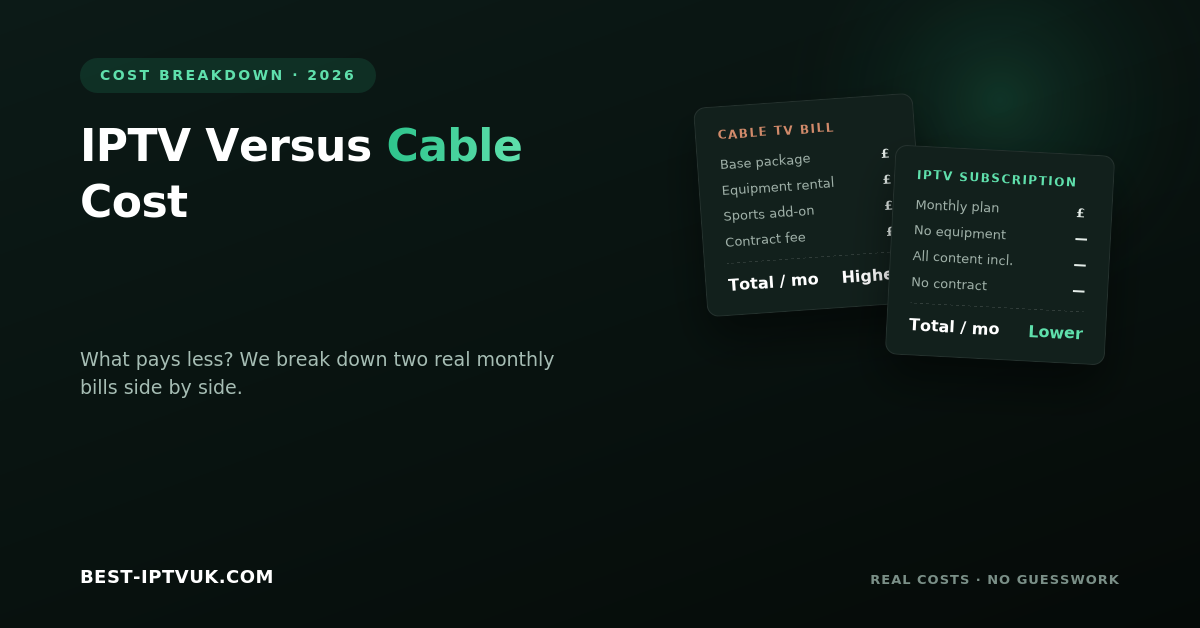
Cable television plans often begin with an attractive introductory price. However, once promotional offers end, monthly costs may increase. Additional features such as premium sports, movie packages, high-definition channels, or extra receivers can further raise the total bill.
IPTV subscriptions are generally simpler. Most providers offer straightforward monthly, quarterly, or yearly plans without requiring separate hardware rental. This allows users to choose a subscription that fits both their viewing habits and budget.
For many households, IPTV delivers a larger selection of content for a lower monthly cost.
Equipment Costs
The equipment required for each service also affects overall expenses.
With cable television, providers may charge installation fees and monthly rental costs for set-top boxes. Additional televisions often require extra receivers, increasing long-term costs.
IPTV usually works with devices many people already own, including:
Smart TVs
Amazon Fire TV Stick
Android TV boxes
Google TV devices
Smartphones
Tablets
Windows PCs
Mac computers
Because existing devices can often be used, the initial setup cost is usually lower.
Content Selection
Content is another important factor when comparing overall value.
Traditional cable packages are commonly divided into different tiers. Sports channels, movie channels, and premium entertainment are often sold separately, meaning viewers may pay more to access everything they want.
Many IPTV services include a broad selection of live television together with movies, TV series, documentaries, children's programming, and international channels under one subscription.
For viewers with diverse interests, IPTV often provides greater variety without requiring multiple add-on packages.
Sports Coverage
Sports fans frequently compare IPTV and cable because live events are often the most expensive part of traditional television packages.
Cable providers generally require premium sports subscriptions for access to major competitions.
Depending on the IPTV service selected, sports content may already be included within the main subscription, making it a more economical option for people who regularly watch football, boxing, cricket, motorsports, or other live events.
As always, stream quality and reliability should be considered alongside price.
Installation and Setup
Getting started is another area where IPTV and cable differ.
Cable television usually requires an installation appointment, equipment setup, and activation by the service provider.
IPTV can often be configured within minutes by installing a compatible IPTV player, entering your subscription details, and connecting to the internet.
The simpler setup process makes IPTV attractive for users who prefer quick activation without waiting for appointments.
Device Flexibility
Modern viewers rarely watch television on only one screen.
Cable television is generally designed around the main television in the home, although additional receivers can be added at an extra cost.
IPTV offers much greater flexibility. Many services allow streaming across multiple compatible devices, making it possible to continue watching from different rooms or while travelling.
This flexibility is particularly useful for families with different viewing preferences.
Contract Flexibility
Contract terms can significantly affect long-term value.
Cable providers often require customers to commit to fixed contracts that may last 12 months or longer. Cancelling early can sometimes involve additional charges.
Many IPTV subscriptions offer shorter billing cycles, allowing users to choose monthly, quarterly, or annual plans based on their needs.
This flexibility gives customers greater control over their subscriptions.
Internet Requirements
Unlike cable television, IPTV depends entirely on a stable internet connection.
For smooth streaming, a reliable broadband connection is recommended.
General speed recommendations include:
| Streaming Quality | Recommended Speed |
|---|---|
| Standard Definition | 10 Mbps |
| HD | 20 Mbps |
| Full HD | 30 Mbps |
| 4K Ultra HD | 50 Mbps or higher |
If your internet connection is slow or unstable, cable television may offer more consistent performance.
Pros and Cons
IPTV
Advantages
Lower monthly costs for many users
Large content libraries
Multi-device support
Flexible subscription plans
Easy installation
On-demand viewing
Disadvantages
Requires reliable internet
Streaming quality depends on network performance
Cable TV
Advantages
Stable connection
Familiar user experience
No internet dependency for viewing
Disadvantages
Higher long-term costs
Equipment rental fees
Limited device flexibility
Long-term contracts
Additional charges for premium channels
Which Option Offers Better Value?
The answer depends on your viewing habits.
If you mainly watch a few local television channels and already receive discounted bundled services, cable television may continue to meet your needs.
However, if you enjoy live sports, movies, TV series, international entertainment, and the freedom to watch across multiple devices, IPTV often provides better value for the price.
Rather than comparing only the advertised monthly fee, consider the total cost of equipment, installation, premium channels, and contract commitments.
Frequently Asked Questions
Is IPTV cheaper than cable?
In many cases, IPTV subscriptions cost less than comparable cable television packages, especially when premium entertainment and sports content are included.
Does IPTV require additional equipment?
Most IPTV services work with devices that many households already own, reducing the need for additional hardware.
Which is easier to install?
IPTV generally offers a faster setup process because it only requires a compatible device, internet connection, and IPTV subscription.
Can IPTV replace cable television?
For many viewers, IPTV provides enough live channels and on-demand entertainment to replace traditional cable services, although individual viewing preferences vary.
Which is better for families?
Both options can work well, but IPTV's support for multiple devices and broader content libraries often makes it a popular choice for households with different entertainment preferences.
Final Thoughts
Comparing IPTV versus cable cost involves much more than looking at the monthly subscription price. Equipment fees, premium channel packages, contract commitments, installation costs, and device flexibility all contribute to the overall value of each service.
For many modern households, IPTV offers a cost-effective alternative that combines live television, movies, sports, and on-demand entertainment in a single, flexible subscription. Cable television still suits some viewers, particularly those who prefer a traditional setup, but internet-based streaming continues to grow because it offers greater convenience and better value for many users.
Before making your decision, compare your current television expenses with the features you actually use. Choosing the option that matches your viewing habits can help you save money while enjoying a more flexible entertainment experience.
Conclusion
To conclude, IPTV Versus Cable Cost: What Pays Less? provides valuable insights into improving your IPTV experience on any device.
By following the steps in this guide, you can enjoy smooth and high-quality streaming with ease.
Always rely on a trusted IPTV provider, keep your app updated, and maintain a stable internet connection for the best performance.
For reliable IPTV services in the UK, visit
lightsteelblue-mallard-181895.hostingersite.com —
your go-to destination for premium IPTV UK subscriptions.
Contact Us
Have questions or need assistance? We're here to help!
Get in Touch
Email Us
contact@best-iptvuk.com
Available 24/7
Call Us
+447404860675
Available 24/7
Live Chat
Available on our website
Response time: Under 5 minutes
Our Hours
Customer Support: 24/7
Sales Department: Mon-Fri, 9am-6pm GMT
Technical Support: 24/7